A lump of stone that once crowned kings
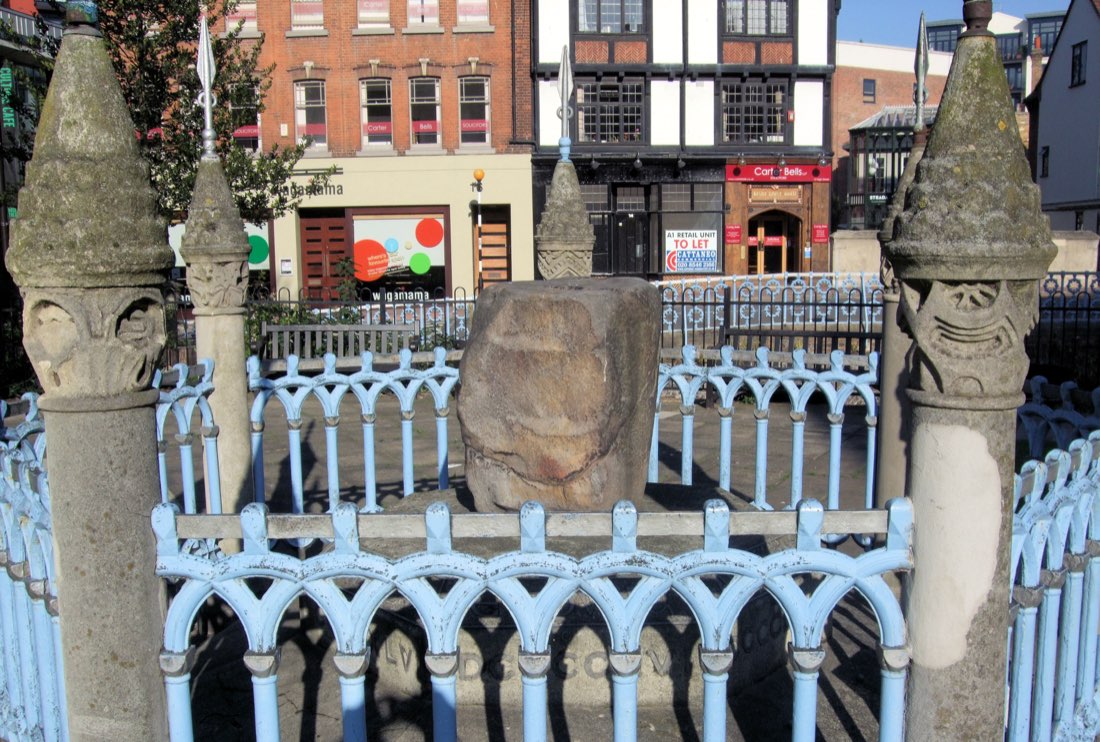
The Coronation Stone sits quietly next to Kingston’s Guildhall, easy to walk past without noticing. It’s a block of sarsen — the same type of stone used to build Stonehenge — and for most of the 19th century it was used as a step for getting on horses. Before that, if you believe the tradition, seven Anglo-Saxon kings were crowned on it.
Three of those coronations are firmly documented in the Anglo-Saxon Chronicle: Athelstan in 925, Eadred in 946, and Aethelred the Unready in 979. Four more are plausible but less certain. The stone itself is Grade I listed by Historic England — whatever its exact history, it’s considered nationally important.
Whether this specific sarsen block was actually the coronation seat, or just masonry salvaged from St Mary’s Chapel when it collapsed in 1730 (killing the sexton), is a genuine scholarly question. Nobody knows for certain. But the tradition is old, the stone is real, and Kingston’s claim to Saxon royalty is grounded in documented history. The town’s very name — Cyninges tun, Old English for “King’s estate” — tells you this was a place of royal significance long before anyone wrote it down.
— Anglo-Saxon ChronicleIn this year Athelstan was chosen as king by the Mercians and was consecrated at Kingston.
The island where Magna Carta got its name
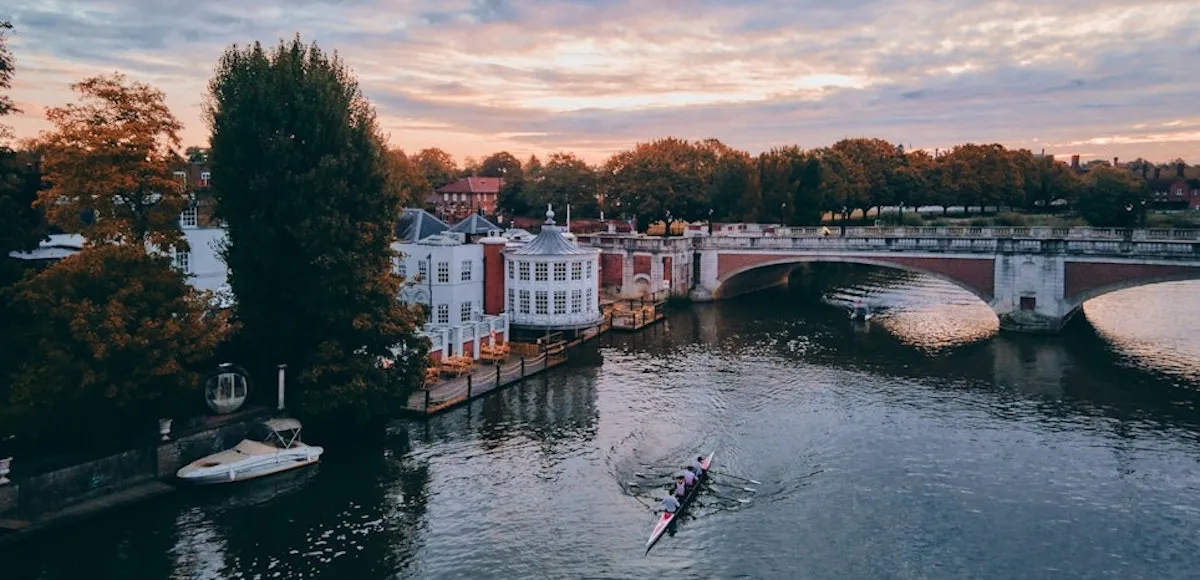
Out on the Thames, just off the Kingston shore, sits Raven’s Ait — a small island that now operates as a wedding venue. In September 1217, it was probably the site of something rather more consequential: the Treaty of Kingston, which ended the First Barons’ War.
The treaty confirmed and re-issued the charter that had first been sealed at Runnymede two years earlier. This 1217 version is significant because it was the first time the document was called “Magna Carta” — to distinguish it from a separate Charter of the Forest issued alongside it. The name stuck.
The word “probably” matters here. The treaty is documented; the location on Raven’s Ait is traditional rather than certain. But the connection between Kingston and the foundation of English constitutional law is real.
London’s oldest bridge you’ve never heard of
Clattern Bridge, tucked behind the marketplace near John Lewis, dates to around 1180. That makes it the oldest surviving bridge in London — older than any crossing on the Thames itself. It’s a scheduled ancient monument and Grade I listed, and most people walk over it every day without knowing.
The name is beautiful: “Clattern” comes from the medieval Clateryngbrugge — the clatter of horse hooves crossing on their way to Kingston’s market. The market place layout itself dates to the late 12th century and is considered one of the best-preserved medieval street plans in London.
The bridge that stood alone
Kingston Bridge, the elegant stone crossing designed by Edward Lapidge and opened on 17 July 1828, has a remarkable claim: for centuries, it was the only crossing point on the Thames between the City of London and the river’s upper reaches. If you wanted to get from the south bank to the north bank anywhere upstream of London Bridge, you went to Kingston.
This made Kingston a place of genuine strategic importance — and a prosperous one. Coaching inns, traders, and travellers all funnelled through the town. Which makes what happened next particularly ironic.
The blunder that built Surbiton
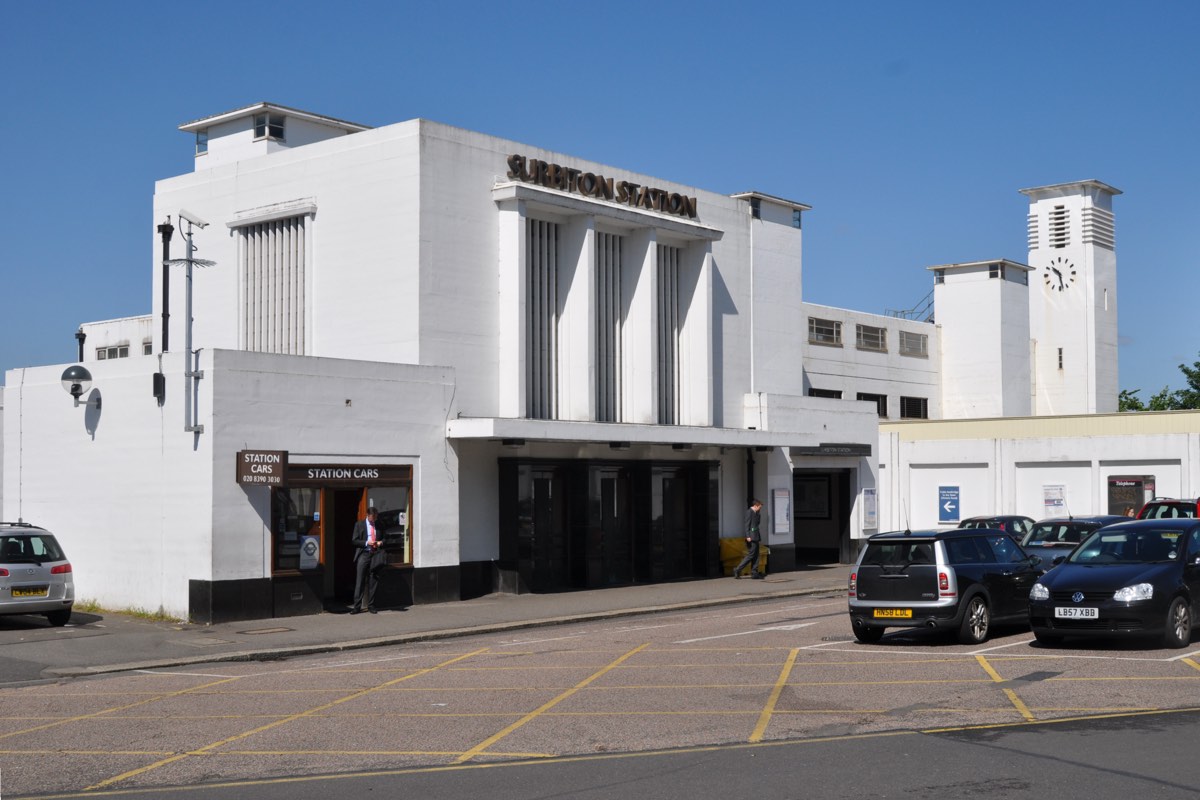
The story goes that in the 1830s, Kingston’s merchants blocked the London and Southampton Railway from running through the town centre, afraid it would kill the coaching trade. Whether that’s exactly what happened or a tale polished over two centuries of retelling — it was first written down by William Biden in 1852, years after the fact — the result is clear: the railway was routed 1.5 miles to the south, through open countryside.
A station opened there on 21 May 1838, initially called “Kingston.” Within a decade, a speculative developer named Thomas Pooley had begun building an entirely new town around it. Pooley went bankrupt in 1843. Coutts Bank took over. The new town became Surbiton — and Kingston got a branch-line station 25 years later, in 1863.
Kingston remained the civic centre, the market town, the royal borough. But the fast trains went through Surbiton. They still do.
A royal borough — one of five
Kingston has held royal borough status since 1927, when it was formally confirmed by George V. It’s one of only five royal boroughs in England and Wales, and received 30 royal charters between 1200 and 1685. The first was likely granted by King John around 1200.
The royal connection isn’t ceremonial padding. Kingston’s identity as a seat of Saxon kingship, a strategic Thames crossing, and a market town with a thousand years of continuous trading makes it one of London’s most historically layered places — even if most visitors only know it for the shopping centre.
Key Dates
Athelstan crowned King of England at Kingston
The first king to rule all of England. His coronation at Kingston laid foundations for modern coronation ceremonies.
Clattern Bridge built
The oldest surviving bridge in London. Its name comes from the medieval 'Clateryngbrugge' — the sound of horse hooves heading to market.
Treaty of Kingston signed on Raven's Ait
Ended the First Barons' War and confirmed Magna Carta. This 1217 re-issue is when the document was first called 'Magna Carta'.
Kingston receives its first royal charter
Likely granted by King John. The borough would receive 30 royal charters between 1200 and 1685.
Kingston Bridge opens
Designed by Edward Lapidge, opened by the Duchess of Clarence. For centuries, Kingston Bridge was the only Thames crossing outside London.
Kingston rejects the railway
The story goes that local merchants feared for the coaching trade. The railway went to Surbiton instead — creating an entirely new town.
Kingston finally gets a railway station
Twenty-five years after Surbiton, on the Shepperton branch line. By then, the damage was done.
Royal Borough status confirmed by George V
Kingston is one of only five royal boroughs in England and Wales.
About this heritage page
Part of Kingston Compass's heritage series, covering the historical significance of Kingston, Surbiton and New Malden. Every claim on this page is source-backed. Where evidence is uncertain, we say so.