A town that didn’t exist before the train
Before 21 May 1838, Surbiton was open countryside in the parish of Kingston. No town, no streets, no church. Then the London and Southampton Railway opened a station — and within a decade, a speculative developer named Thomas Pooley had laid out plans for an entirely new settlement.
Pooley, a Cornishman and local malthouse owner, conceived a fashionable residential suburb next to the railway between 1838 and 1842. He went bankrupt in 1843. Coutts Bank assumed control and commissioned architect Philip Hardwick and Cubitts the builders to create what the records describe as “modest yet elegant stuccoed semi-detached villas and terraces in the Regency style.”
It worked. Population grew from roughly 4,700 in 1860 to 8,000 by the mid-1870s. Handsome Italianate villas and mansions appeared along Maple Road and Claremont Road. Kingston had the history and the market; Surbiton had the fast trains and the desirable addresses. Locals called it “Queen of the Suburbs” — before Ealing borrowed the title.
The area around the station had originally been called “Kingston-upon-Railway” in the 1840s. In the 1860s, the station was renamed “Surbiton” — an existing local place name, attested as far back as “Suberton” in 1179 — to distinguish it from the new Kingston station on the Shepperton branch line.
The water that saved London
The most historically significant thing that happened in Surbiton has nothing to do with railways or villas. It happened at Seething Wells, on the Thames bank along Portsmouth Road, and it helped end cholera in London.
In the 1840s and 1850s, cholera epidemics were killing thousands. The prevailing theory was “miasma” — bad smells caused disease. Dr John Snow thought otherwise. He believed cholera was waterborne, and in 1854 he got the data to prove it.
The proof came from Seething Wells. The Lambeth Waterworks Company had moved its intake to this upstream site in 1852, engineered by James Simpson — the same man who had pioneered the world’s first slow sand filtration system at the Chelsea Waterworks in 1829. The water drawn from Seething Wells was filtered and relatively clean.
— Dr John Snow, On the Mode of Communication of Cholera, 1854The cholera was fourteen times more fatal among those supplied with the impure water of the Southwark and Vauxhall Company than among those who received the filtered water from Seething Wells.
Snow’s “Grand Experiment” compared households served by two different water companies — identical in every other respect. Lambeth customers, drinking Seething Wells water, had 14 fatal cholera cases per 26,107 houses. Southwark and Vauxhall customers, drinking from the polluted tidal Thames at Battersea, had 286 deaths per 40,046 houses. The evidence was overwhelming.
Snow’s study is now regarded as a founding text of modern epidemiology. The data that proved it came from a waterworks on Portsmouth Road, Surbiton.
The Chelsea Waterworks Company followed Lambeth to Seething Wells in 1856. Together, the two installations supplied clean water to much of South London for over a century. Thames Water decommissioned the site in 1992. Several buildings survive with Grade II listed status, and the filter beds are now a Site of Importance for Nature Conservation — 30 years of nature reclaiming Victorian infrastructure.
Queen Victoria’s promenade
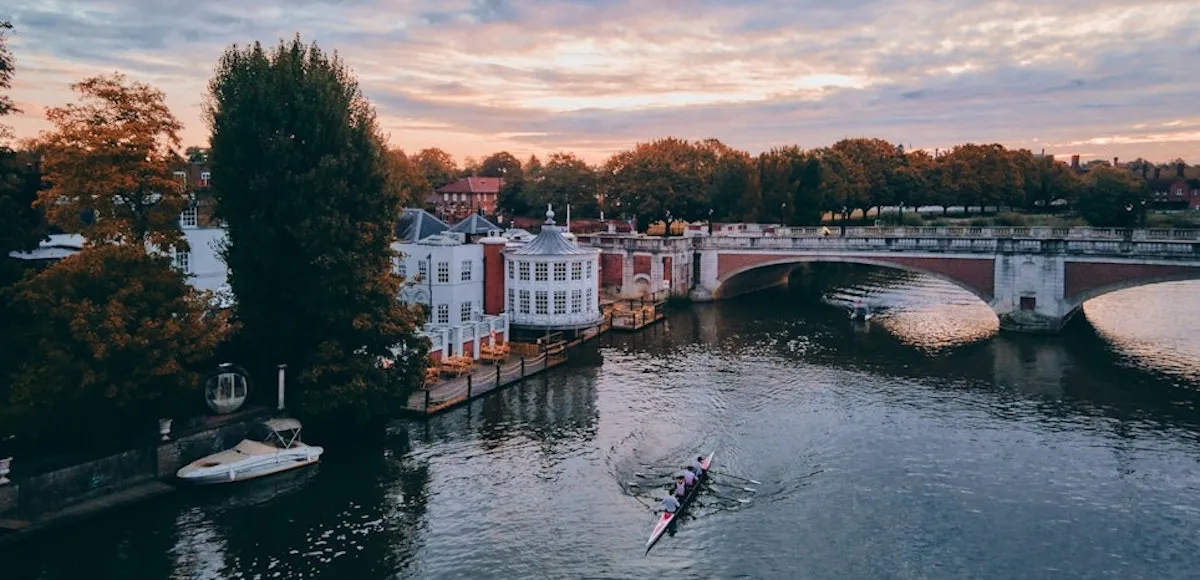
Until the 1850s, the riverbank below Portsmouth Road was dangerous — gravel working had undermined the shoreline. William Woods, the same builder who developed Surbiton Park, constructed Queen’s Promenade between 1852 and 1854, using spoil from the nearby waterworks construction to infill the bank.
Woods originally intended it as an exclusive walkway for his villa residents, but after the council offered to help fund it, he agreed to public access. In August 1856, Queen Victoria’s carriage was diverted along the route on her way back from Claremont Estate. Hundreds of schoolchildren cheered. The Promenade got its name, and its royal cachet.
Within five years it had been neglected. It was rebuilt and widened from 6 to 9 metres using stone from the demolished Old Blackfriars Bridge — the original Robert Mylne bridge torn down from 1860 when Joseph Cubitt replaced it. In 1896, the promenade was extended to join the High Street.
Today it remains a public riverside walkway within the Riverside South Conservation Area, maintained by the Queen’s Promenade Friends group.
Hardy’s writing room
In 1874, the novelist Thomas Hardy and his wife Emma rented St David’s Villa in Southborough (then part of Surbiton). Hardy was 33 and newly married; they chose Surbiton for its easy railway access to London’s literary marketplace.
During his time at that address, Hardy published Far from the Madding Crowd — arguably his most-loved novel, and the book that made his reputation. He wrote poems about Surbiton, Southborough, and Long Ditton. The Hardys left for central London lodgings in March 1875.
St David’s Villa was demolished in 1960. A blue plaque at 15 Hook Road marks Hardy’s connection to the area, though the exact details of this address should be verified — some sources flag uncertainty about whether the plaque’s location matches Hardy’s actual residence.
About as far from a madding crowd as you could get.
The oldest sailing club on the river
Thames Sailing Club was founded at Surbiton in 1870 — making it the oldest river sailing club in Britain. The chalet-style boathouse dates from the same year and is described as the oldest of its kind in London. The first press coverage appeared in The Field on 24 December 1870. The first race was held on 18 March 1871.
The club still races from its Surbiton riverside location. The Victorian clubhouse, rebuilt in original style, is noted as a building of “special interest.”
Art Deco landmark
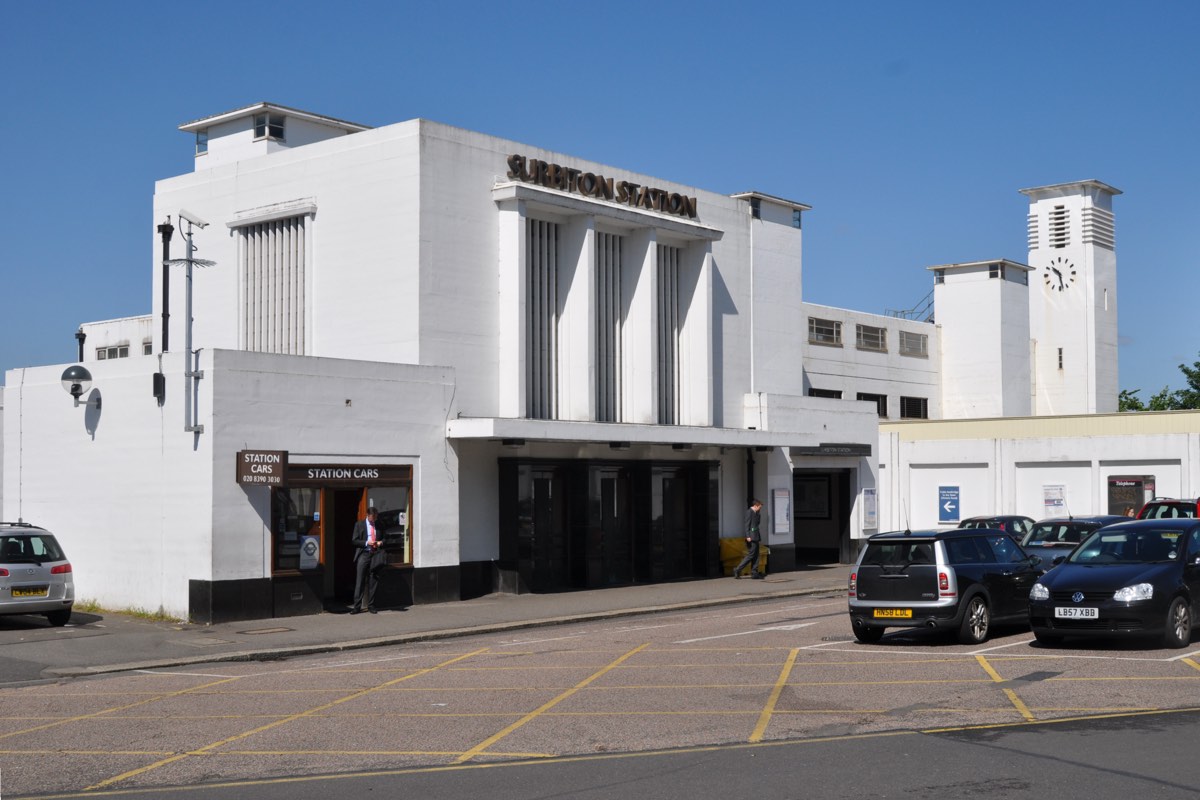
The current Surbiton station building, opened in 1937, was designed by James Robb Scott, chief architect of the Southern Railway. Grade II listed, it’s considered one of the finest examples of 1930s railway architecture in Britain — a dramatic clock tower, lofty booking hall, and bronze uplighters. A hundred years after the first station opened in open countryside, the railway that built Surbiton got an architectural landmark worthy of the town it created.
Key Dates
James Simpson pioneers slow sand filtration
The world's first public water filtration system, engineered at the Chelsea Waterworks Company. Simpson would later design Seething Wells.
The railway arrives — Surbiton is born
Kingston station (later renamed Surbiton) opens on 21 May on the London and Southampton Railway. Before this, the area was open countryside.
St Mark's Church consecrated
The first parish church in Surbiton — Gothic Revival, and the oldest church in the area. Badly damaged in the Blitz, it reopened in 1960.
Lambeth Waterworks opens at Seething Wells
Engineered by James Simpson. Four 600-horsepower steam engines pumped ten million gallons daily through slow sand filtration beds.
Dr John Snow's 'Grand Experiment'
Snow proved cholera was waterborne by comparing Lambeth's clean Seething Wells water against polluted Southwark & Vauxhall water. Cholera was 14 times more fatal with the dirty supply.
Queen Victoria opens the Promenade
Returning from Claremont Estate, her carriage was diverted along Portsmouth Road. Hundreds of schoolchildren greeted her.
Thames Sailing Club founded
The oldest river sailing club in Britain, still racing from its original Surbiton riverside location.
Thomas Hardy moves to Surbiton
Hardy and his wife Emma rented St David's Villa, Southborough. He published Far from the Madding Crowd during his time here.
Art Deco station opens
Designed by James Robb Scott, now Grade II listed — considered one of the finest examples of 1930s railway architecture in Britain.
Seething Wells decommissioned
Thames Water closes the waterworks after 140 years. The filter beds are now a Site of Importance for Nature Conservation.
About this heritage page
Part of Kingston Compass's heritage series, covering the historical significance of Kingston, Surbiton and New Malden. Every claim on this page is source-backed. Where evidence is uncertain, we say so.